Breakthrough medical innovation saves Dachshunds from German ban
01.04.2026
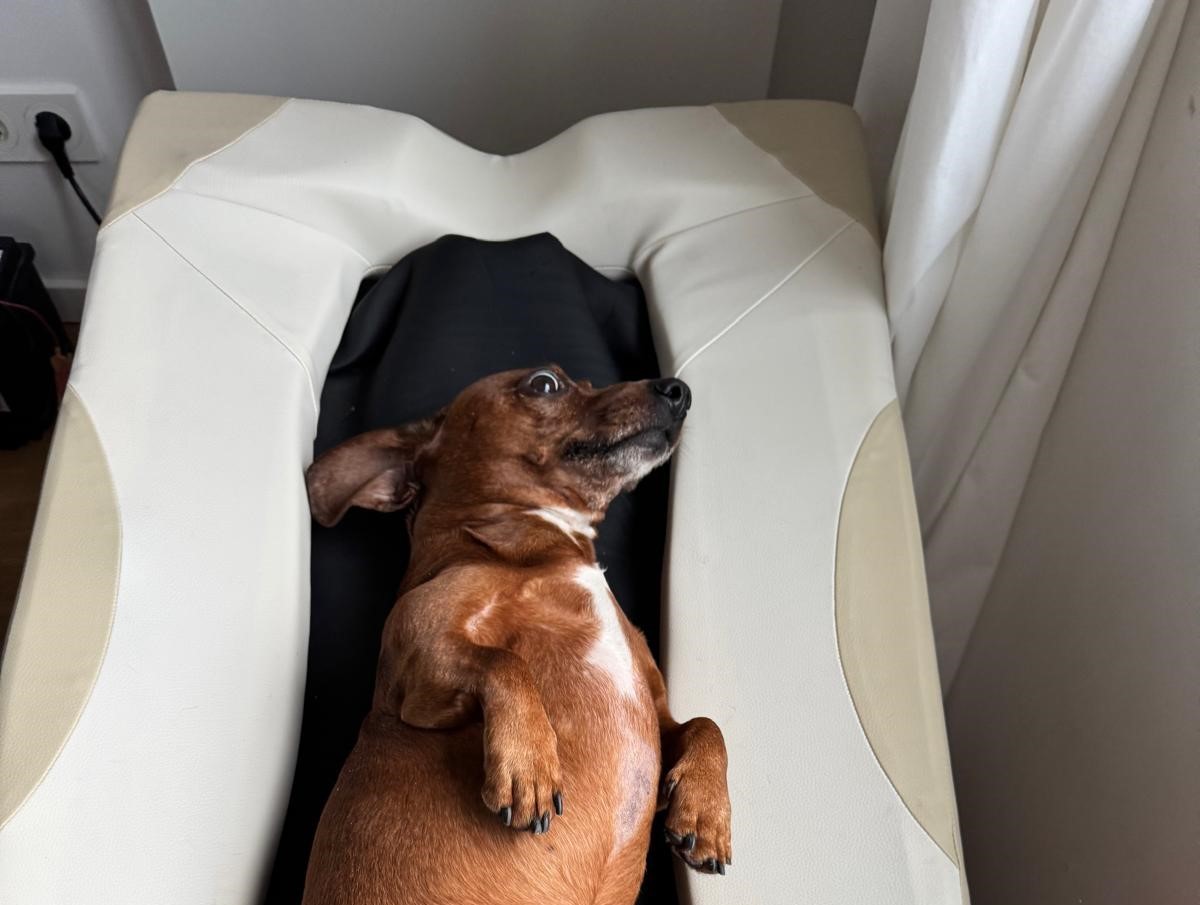
Few things are more German than the Dachshund, but those cute, Bratwurst-shaped dogs face the threat of being banned in their own country. Luckily for them and their owners, a new technology has emerged that may very well secure their future.
Although surprising, the threat to the Dachshund is grounded in basic genetic science. As Professor Hartmuth Schimmelpfennig of Darmstad University’s domestic animal research institute explains: “The Dachshund is a pure breed. While this is certainly an attractive feature for owners of this breed, it results unfortunately in certain genetically derived health issues, which might be avoided if its genes were intermingled with those of other canine breeds.”
The specific problem facing the Dachshund is a genetic loss of cartilage in the hips, leading to pain and sometimes severe mobility impairment. Gisela Radeberger, a Dachshund owner in Ulm, explains that her Dachshund, Uli, was unable to walk up the short flight of stairs connecting the lounge of her apartment to her kitchen: “I had to install a stair lift for him, it was so expensive!”
But the most concerted pressure on Dachshunds and their owners in Germany has come from an unlikely source: the country’s well-regarded mutual health insurers or Krankenkassen. As in many other European countries, Germans pay a portion of their salary to a mutual health insurer, who in return covers a significant proportion of their health expenses, including discretionary costs. The system is considered very successful by Germans, but its extension to pet health insurance, or Tierkrankenversicherung, has increasingly led to mounting bills for the sector - due to the costs of treatment for Germany’s iconic dog breed.
Dr. Ing. Heiko Spaten, chairman of the association of German mutual health insurance providers (B.V.K.g.V.D.) states on behalf of his members that “the Dachshund has become, shall we say, something of a status symbol in Germany, and more and more of them are therefore bred. This only accelerated during the COVID era. While we understand that the Dachshund is an appealing dog, the costs faced by B.V.K.g.V.D. members for their treatment, which is becoming more and more expensive, is now, I regret to say, simply unaffordable.”
Under pressure from the B.V.K.g.V.D. (as well as non-Dachshund owning voters angry about the impact on their premiums), legislation banning the breed for new owners has passed its first reading in the Bundesrat. However, Dachshund owners are fighting back. S. Esther Kölsch, President of the Sachsen Anhalt Dachshund owners association posted on X (formerly Twitter): “The Dachshund is an integral part of the German identity and brings joy into the lives of hundreds of thousands of owners every day. It is an essential tradition which must be protected at all costs. These heartless insurers should be ashamed of themselves, blaming this small, vulnerable creature for the consequences of their own incompetence and excessive bureaucracy!”
As the conflict became more and more intractable, with some exasperated politicians even proposing to resolve the issue by calling a referendum, a solution has presented itself at the eleventh hour from an unlikely source. Chongsu Lee, inventor of the BackHug back therapy device explains: “We know that BackHug helps people with hip issues by releasing stiffness in the lower back, which in turn alleviates the pressure on the hips (as well as the knees). I have a lot of friends in Germany who told me about the problem with the Dachshshund dog. At first I couldn’t believe it. But when I realised it was true - I put my engineering hat on.”
It took 18 months of research, but the BackHug team finally produced a prototype of a BackHug narrow enough and with small enough fingers to loosen the Dachshund’s back and take the pressure off its genetically impaired hips. Against all odds, a pilot study in Bayerisch Gmain has been successful, with all twenty participating Dachshunds showing an increase in mobility (average increase 36.4%). Paula Nehr, one of the participating owners, commented after her Dachshund Ingo began walking normally again: “It’s really been a game changer for us.”
Interviewed after being made an honorary member of the German Dachshund association, first class, Lee would not be drawn on whether BackHug would be adapted to other animals: “Saving the Dachshund was a great honor but also a great challenge. Whether we can meet similar challenges in the future, you’ll have to watch this space.”